Downtown Lebanon NH Living: Walkability, Parks, And Commutes
If you want a downtown that feels active without feeling overwhelming, downtown Lebanon deserves a closer look. For many buyers and relocating professionals, the appeal is simple: you want daily convenience, access to the outdoors, and a commute that fits real life. Downtown Lebanon offers a rare mix of civic energy, trail access, and regional connectivity in the Upper Valley. Let’s dive in.
Downtown Lebanon is centered around Colburn Park, the pedestrian mall, and a compact civic and commercial core. City planning materials describe Lebanon as an Upper Valley employment center with a small-town feel and some urban amenities. That combination gives you a downtown that is practical for day-to-day living, not just pleasant to visit.
In the core, you are surrounded by a concentration of shops, restaurants, services, and public spaces. The city notes that the pedestrian mall is home to many small professional and service businesses, restaurants, and retail shops. For you, that can mean fewer short car trips for casual errands, coffee runs, or meeting friends downtown.
Colburn Park is the anchor of downtown life. The city describes it as being surrounded by City Hall, the Opera House, the Soldiers Memorial Building, the Carter House, the public library, the fire department, the post office, banks, restaurants, shops, and other historic buildings. That kind of layout supports a more connected daily routine if you enjoy getting around on foot.
The park itself adds more than scenery. It includes a bandstand, benches, picnic areas, a playground, a fountain, and public transportation access. Instead of serving as a pass-through space, it functions as a true community hub in the middle of downtown.
City information says Colburn Park hosts live music, concerts, dancing, yoga, the farmers’ market, storytime events, and outdoor movies during warmer months. In winter, the holiday lighting helps keep the space active and welcoming. If you are thinking about relocation, this kind of recurring activity can make downtown feel lived-in and consistent throughout the year.
That matters because some downtowns look charming but do not shape your daily routine. In Lebanon, the civic core appears to offer a real weekly rhythm built around public space, local businesses, and community events. For buyers who value a sense of place, that can be a meaningful part of the appeal.
One of downtown Lebanon’s biggest advantages is how closely outdoor access connects to the center of town. The Lebanon Recreation & Parks Department maintains numerous parks and facilities and also helps manage the Northern Rail Trail and the Mascoma River Greenway with partners. The city also notes that Lebanon has more than 2,000 acres of permanently preserved conservation land.
That broader outdoor network supports a range of routines. The city lists hiking, biking, swimming, fishing, camping, and cross-country skiing among the available uses. If you like balancing workdays with fresh air and movement, Lebanon offers more than a single downtown park.
A standout feature is the downtown tunnel. According to city facilities information, the tunnel connects the Northern Rail Trail and the Mascoma River Greenway directly to downtown Lebanon. It is ADA accessible, lit, and usable as both a bike trail and walking path.
That connection is important because it makes the trail system feel integrated with downtown instead of separate from it. You can picture a routine where a walk, bike ride, or short outdoor break starts close to the civic core. For many buyers, that type of convenience adds real lifestyle value.
Recent city documents describe the Mascoma River Greenway as roughly 2.3 to 2.4 miles long today, with a longer 4-mile vision for the corridor. The Northern Rail Trail stretches about 58 miles from Lebanon to Boscawen. Together, those routes offer both a manageable everyday option and a much longer regional trail experience.
If you want a short loop before work or a longer weekend ride, downtown Lebanon gives you access to both. That flexibility can be especially attractive if you are relocating from a place where outdoor recreation requires more driving and planning.
Lebanon plays a major role in the Upper Valley economy. The city’s master plan says that as of 2022, more than 20,000 people worked in Lebanon, more than 16,800 commuted into the city, and the average travel distance to work was less than 10 miles. Those numbers reinforce Lebanon’s role as a regional employment center.
For you as a homebuyer, that matters because housing decisions often come down to time and flexibility. Living in or near downtown Lebanon may help simplify trips within a broader cluster of Upper Valley employers and services. In a region where many people travel between communities for work, a central location can be a practical advantage.
The city’s master plan identifies several of Lebanon’s largest employers based on 2023 reports. Dartmouth Health leads the list with 8,526 employees. Other major employers include Alice Peck Day Hospital, Hypertherm, Fujifilm, SAU 88, the City of Lebanon, Novo Nordisk, Timken, Hannaford, and Geokon.
That employment mix is useful if you are relocating for healthcare, education, manufacturing, municipal work, or related fields. It also helps explain why Lebanon continues to attract buyers who want a home base within the Upper Valley network rather than in a more isolated setting.
Advance Transit is a key transportation resource for the region. The system is fare-free and serves Upper Valley communities in both New Hampshire and Vermont. Current routes include Blue for Lebanon-Hanover, Pink for Hanover-Lot 9/DHMC-Centerra, Red for Lebanon-West Lebanon, and a Saturday Blue-Red route.
The city’s downtown parking-lots report adds a useful detail for everyday life: the North Park Street stop sits next to City Hall, with sidewalks and a crosswalk connecting it to Colburn Park. If you are hoping to reduce some driving, downtown Lebanon may support a partial or even fuller car-light routine for trips to downtown, Hanover, DHMC, and West Lebanon.
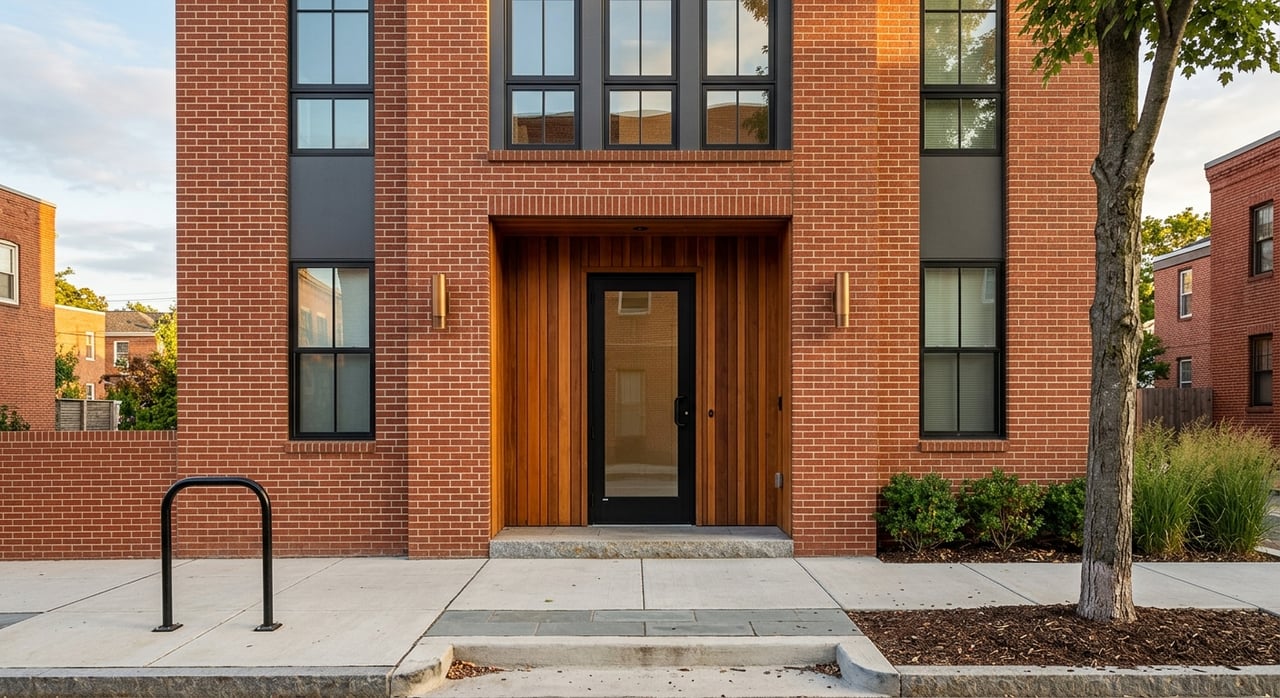
Downtown Lebanon is not a one-note housing market. The area around Colburn Park has notable historic depth. The Colburn Park Historic District includes 23 structures and blends residential, civic, and commercial buildings in architectural styles ranging from Federal and Greek Revival to later 19th- and 20th-century forms.
For buyers, that can translate into character-rich buildings and streetscapes rather than a downtown made up only of newer construction. If you enjoy older architecture, walkable surroundings, and a stronger sense of place, this part of Lebanon may feel especially appealing.
Lebanon’s Heritage Commission also points to older housing stock in other parts of the city. Examples include Crafts Avenue, a neighborhood developed between 1892 and 1960 with single-family homes, and Dana House, identified as the oldest existing house in Lebanon. These details help paint a broader picture of a market with historic and established housing choices.
That does not mean every home near downtown will match the same style or era. It does suggest that buyers looking for restored homes, period details, or established settings may find meaningful options in Lebanon.
If you prefer lower-maintenance living, Lebanon also offers apartment and condominium communities. The city’s housing resource page lists options such as Boulders Condominiums, Emerson Place, Ivy Place Condominiums, Mascoma Village, Nature Walk Condominiums, Rivermere, Sachem Village, Terrace View, and Stone Farm Apartments. That variety supports buyers and renters looking for simpler upkeep or easier commuting.
This matters for a wide range of households. You may be relocating for work, planning a first move to the Upper Valley, or looking for a home that makes it easier to lock up and travel. In those cases, multifamily and condo inventory can expand your choices.
The city is also pursuing additional housing activity near downtown. The 20 Spencer Street redevelopment is being pursued for 100% residential workforce housing, and the downtown parking-lots redevelopment process continues to evaluate riverfront, parking, and mixed-use possibilities. In practical terms, that means the downtown area may continue to evolve over time.
For buyers who are thinking long term, it is worth understanding that downtown Lebanon is not static. The combination of established character and ongoing planning can be appealing if you want a market with both history and forward momentum.
Downtown Lebanon tends to work especially well for people who want more than a pretty main street. If you value walkability, public green space, trail access, and practical commute options, the area checks many important boxes. It can also be a strong fit if you want to stay connected to the wider Upper Valley while living in a clearly defined town center.
You may be drawn to historic homes, a condo with easier upkeep, or a home search shaped by access to major employers. Whatever your priorities, downtown Lebanon offers a lifestyle that blends convenience with outdoor access in a way that feels distinct in the region.
If you are considering a move to Lebanon or comparing Upper Valley communities, working with a local guide can help you narrow in on the right fit. For personalized insight on neighborhoods, commute patterns, and available homes, reach out to Jessica Dolan.
August 27, 2026
August 20, 2026
August 13, 2026
August 6, 2026
August 6, 2026
July 23, 2026
July 16, 2026
July 9, 2026
July 2, 2026
Dolan Real Estate has established a locally owned and operated real estate firm that surpasses the services offered by larger, franchise-based companies. Their clients can attest to the exceptional quality of their work.