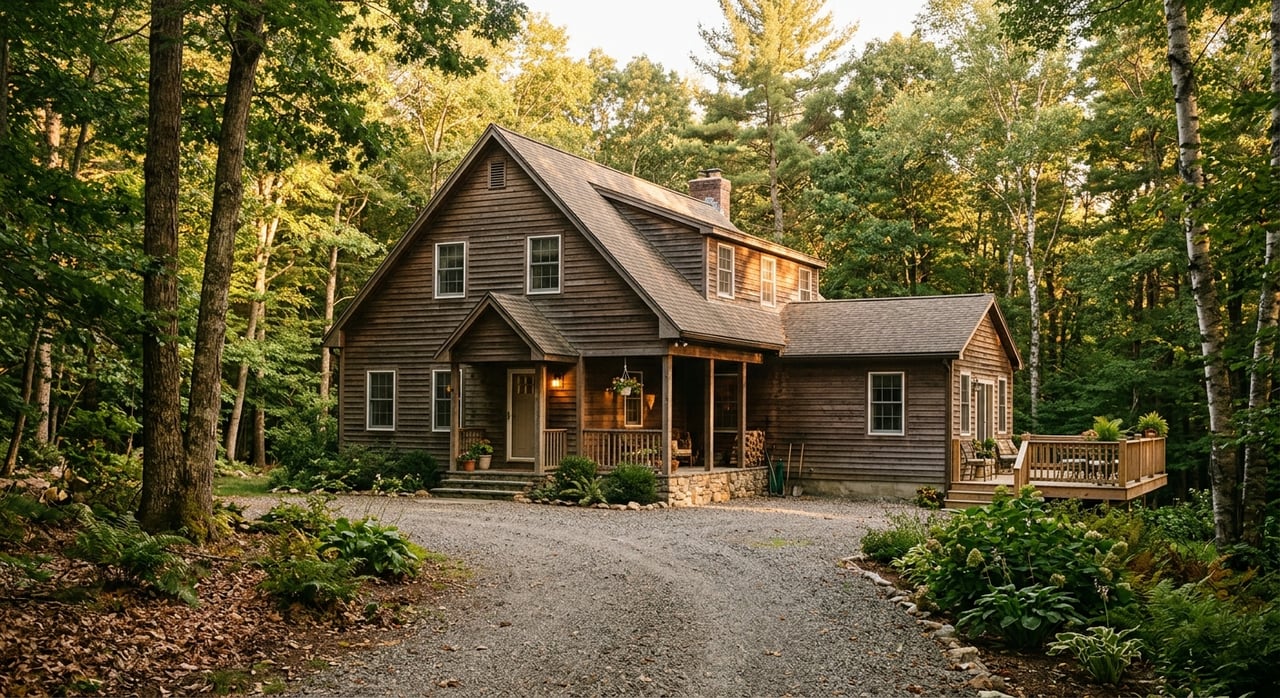
Grantham NH Homes for Sale Beyond Eastman
If you are drawn to Grantham for its quiet roads, larger lots, and easy reach to the Upper Valley, you are not alone. Many buyers know Eastman by name, but the rest of Grantham offers a very different ownership experience with its own mix of rural homes, village-era properties, and back-road settings. If you are considering homes beyond Eastman, this guide will help you understand how zoning, access, utilities, and day-to-day ownership can shape your decision. Let’s dive in.
Grantham sits off Exit 13 on I-89 in Sullivan County, and town materials describe it as a small rural town in the Upper Valley and Lake Sunapee region. It is also positioned within practical reach of Lebanon and Concord, with New London, Alice Peck Day, and Dartmouth Hitchcock listed nearby.
That location matters because many buyers choose Grantham for a balance of privacy and regional access. You may get more land and a quieter setting than you would in a more in-town location, while still staying connected to the I-89 corridor for commuting and daily travel.
One of the biggest mistakes buyers can make is treating all of Grantham as one uniform market. Eastman is a separate community with roughly 3,700 environmentally protected acres and its own amenity structure, which creates a different ownership model from the rest of town.
The tax picture reflects that difference. Grantham’s assessing information lists a higher 2025 total tax rate inside Eastman than outside it, at $22.13 versus $19.90 per $1,000 of assessed value. For you as a buyer, that means a side-by-side cost comparison is essential before you focus only on list price.
Outside Eastman, the housing stock is layered rather than uniform. Town planning documents note that building permits increased after the recession and that some seasonal residences were converted into full-time homes, which helps explain why the market includes a broad mix of property types.
Current public listings also show that range in a practical way. The sample includes an 1893 home on 3.2 acres, a 1905 home on 1.23 acres, a 1977 home on 1.43 acres, and a 1999 home on 19 acres.
For you, the takeaway is simple: non-Eastman Grantham can include older homes near established roads, later-built rural properties, and houses with substantial acreage. If you want charm, privacy, land, or a mix of all three, your search may be broader here than you first expect.
Before you get attached to a property, confirm its zoning district. Grantham’s ordinance separates most residential land into CVRD, RR1, RR2, and RR3, and those districts carry very different default lot-size rules.
Here is the basic pattern buyers should know:
The ordinance does allow smaller cluster-development lots in some situations, but that is not the standard rural pattern. In most cases, zoning helps explain why homes beyond Eastman often feel more spread out and land-focused.
For many buyers, Grantham is less about one neighborhood and more about regional convenience. Town materials place New London about 11 miles away, Alice Peck Day about 16 miles away, Dartmouth Hitchcock about 18 miles away, Manchester about 60 miles away, and Boston about 110 miles away.
That geography supports what the town’s master plan describes along the I-89 corridor: Grantham sits between the Lebanon-Hanover and New London-Lake Sunapee labor market areas. If you are relocating, buying a second home, or trying to stay connected to multiple destinations, that regional position can be one of Grantham’s strongest advantages.
A rural setting can be appealing, but it also comes with practical ownership details. Town information lists Eversource electric, Consolidated Communications telephone, Comcast cable, and cellular access.
You should also plan for self-managed trash and recycling logistics. Grantham does not offer curbside trash pickup or a mandatory recycling program, and the transfer station requires stickers and operates with limited hours.
That may not be a dealbreaker, but it is part of everyday ownership. If you are moving from a more serviced in-town area, this is one of those small details that can affect your routine and monthly planning.
In rural markets, road access can shape both lifestyle and financing. In Grantham, a driveway permit is required for a driveway opening onto a town road or town-maintained road, while state roads require a state permit.
The town also notes that private driveway connections and culverts are the landowner’s responsibility. That means buyers should look beyond the house itself and understand what ongoing access maintenance may involve.
If a property is accessed by a Class VI road, the issue becomes even more important. The town states that it has no maintenance or snow-plowing responsibility for Class VI roads and no liability for damages tied to that access.
The landowner is responsible for repairs and improvements. If you are considering a remote or back-road property, road status should be treated as a core part of your due diligence from the start.
Many non-Eastman properties may rely on private systems, so it is wise to ask direct questions early. If a home has a private well, New Hampshire DES recommends water testing during the inspection period.
If the property is waterfront and has a septic system in protected shoreland, NHDES says the buyer must obtain a septic evaluation before transfer. These are not minor details, especially if you are purchasing from out of area and want fewer surprises after going under contract.
If you hope to add a garage, expand the home, or build an outbuilding later, make sure you understand the site first. Grantham’s building-permit information says New Hampshire DES approval may be needed before a permit application will be accepted for properties near wetlands or shoreline.
The zoning ordinance also includes water and wetland setbacks. So if future improvements matter to you, do not assume a large lot automatically means simple approvals.
When you compare homes beyond Eastman, a few checkpoints can save time and protect your budget.
This kind of review is especially important in Grantham because two homes with similar list prices can come with very different long-term costs and responsibilities.
The best way to approach Grantham beyond Eastman is to think in terms of lifestyle and logistics together. A beautiful older home on Route 114, a newer home with acreage, and a more secluded back-road property can all fit the same town search, but they may live very differently once you own them.
If you are buying in Grantham, it helps to narrow your priorities early. Decide how much land you want, how much road maintenance complexity you are comfortable with, and how important commuting access is to your daily life.
That clarity can help you move faster when the right property appears. It can also help you avoid falling in love with a setting that does not match your practical needs.
If you want help sorting through Grantham’s rural property patterns, ownership costs, and location tradeoffs, reach out to Jessica Dolan for a personalized consultation.
August 13, 2026
August 6, 2026
August 6, 2026
July 23, 2026
July 16, 2026
July 9, 2026
July 2, 2026
June 25, 2026
June 18, 2026
Dolan Real Estate has established a locally owned and operated real estate firm that surpasses the services offered by larger, franchise-based companies. Their clients can attest to the exceptional quality of their work.