Comparing Lyme NH Homes for Sale by Setting
If you are drawn to Lyme, chances are you are not looking for just any home. You are looking for a setting that matches the way you want to live, whether that means a house near the village core, a quiet home on a back road, or a property closer to the Connecticut River. The good news is that Lyme offers all three, and each one comes with a distinct feel, land pattern, and buying process. Let’s take a closer look at how village, hilltop, and river homes in Lyme NH compare.
Lyme’s master plan describes the town as two small villages set within a working rural landscape. In practical terms, that creates a clear pattern for buyers. You will generally find village clusters in Lyme Common and Lyme Center, lower-density homes in the central hills and along back roads, and river-oriented properties closer to Route 10 and River Road.
That structure matters because it shapes daily life as much as it shapes the view from your porch. Lot sizes, road access, and zoning expectations can vary a lot from one setting to another. If you understand those differences early, you can narrow your search with more confidence.
Village homes in Lyme are centered around Lyme Common and Lyme Center. These areas are the most centralized parts of town and reflect Lyme’s traditional town pattern. They tend to offer the shortest trip to town-center routines while still feeling distinctly rural rather than suburban.
Lyme Common is the town’s traditional civic center. Historic district records describe it as a long-standing center of religious, educational, political, and social activity. The area includes the Common itself along with civic landmarks like the Congregational Church and Nichols’ Store.
For a buyer, this often translates into a setting with a strong sense of place and a more classic village layout. Many of the buildings date to the pre-Civil War period, and the overall townscape remains largely intact. If you appreciate historic character and a more central location, Lyme Common may be the first place you want to explore.
Lyme Center is the town’s other village cluster, and it has a different layout. Rather than centering on a common, the historic district stretches along Dorchester Road in a more linear pattern. It is mostly residential, with no sidewalks, and includes buildings such as the Baptist Church and Vestry, the Academy, and the Lyme Country Store.
The district documentation notes that many homes and structures are frame-and-clapboard buildings, with Greek Revival as the dominant style. If you are drawn to architectural continuity and a quieter village setting, Lyme Center may feel especially appealing.
The zoning ordinance gives village districts some of the smallest minimum lot sizes in town, generally starting at 1 acre. That does not mean every parcel feels small, but it does mean the village pattern is typically more compact than hilltop or rural properties.
For buyers, that can be a plus. A smaller lot may mean less land to maintain and a more connected feel to the village core. At the same time, these homes may come with more immediate neighbors and less separation than you would find farther out.
If your ideal Lyme property involves more acreage, more privacy, and a stronger sense of being tucked into the landscape, hilltop and back-road homes may be the best fit. The town’s master plan describes the central hills as scattered low-density residential areas, and notes that north of Lyme Common the town becomes more rural, with fewer homes and fewer commercial uses.
This part of Lyme often appeals to buyers who want space and a slower rhythm. You may find wooded settings, open land, and homes that feel more removed from the village clusters. In many cases, the setting itself becomes a major part of the property’s value.
The Rural District is intended to preserve rural land uses and limit demands on town services. The zoning framework supports that goal with larger minimum lot sizes. In Lyme, the Rural District requires 3 acres within 1,000 feet of state highways and 5 acres elsewhere.
That larger-lot pattern shapes what many buyers picture when they think of a classic Upper Valley country property. It can mean more privacy, more flexibility in how the land feels, and a different sense of scale from village homes. It can also mean longer driveways, more land care, and more attention to access.
One of the most important factors in Lyme’s hilltop and back-road market is the road network. According to the town’s roads plan, Lyme has 13 miles of paved roads and 39 miles of dirt roads. Many of those roads are more than a century old and were not built for heavy traffic.
That matters in every season, but especially in winter and during muddy shoulder seasons. The Highway Department handles routine upkeep, winter plowing, and sanding, yet buyers should still expect a more weather-sensitive routine than they would have in a village setting. If you are considering a back-road home, road type should be part of your decision from day one.
Several well-known Lyme roads are designated scenic roads, including Acorn Hill, Breck Hill, Highbridge, Orfordville, Pico, River Road, and Washburn Hill. Scenic-road designation helps preserve features like trees and stone walls.
For you as a buyer, that often contributes to the wooded, protected feel that makes these roads so memorable. It is part of why many hilltop and back-road properties feel especially quiet and visually appealing. That same protection can also mean you will want to look carefully at any future plans involving driveway work, frontage, or site changes.
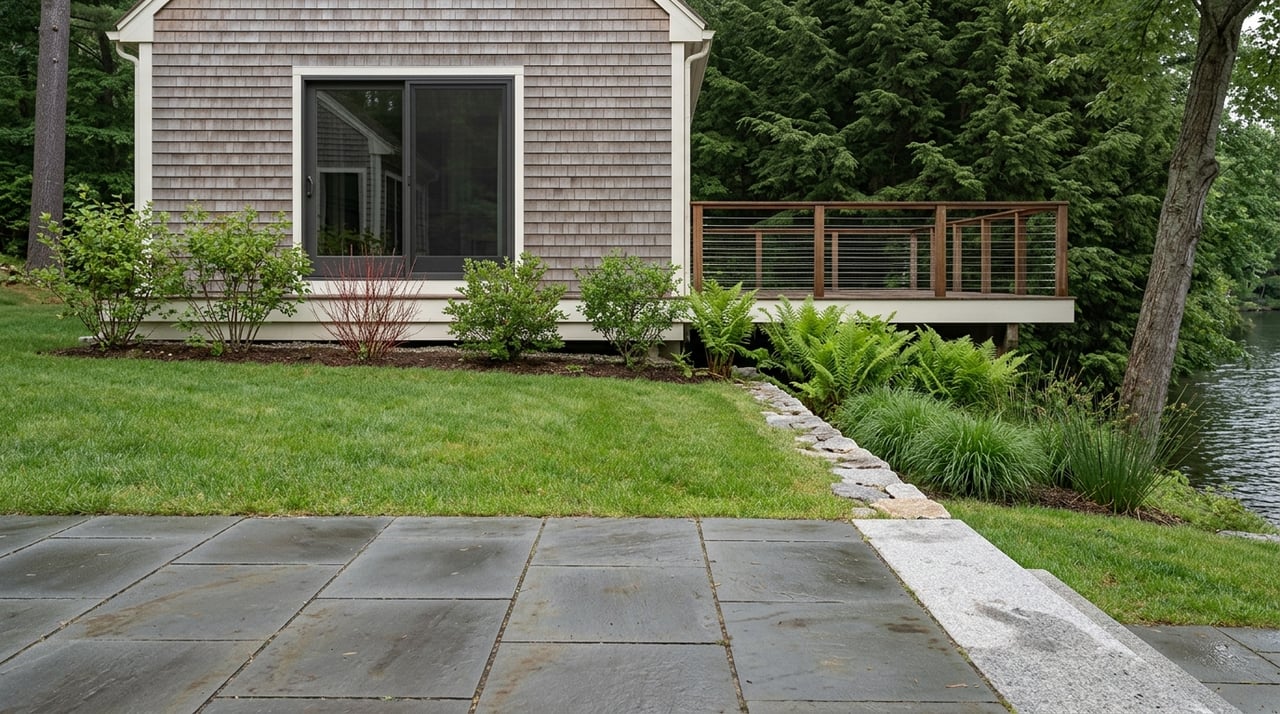
For some buyers, the strongest draw in Lyme is the Connecticut River corridor. The river forms Lyme’s western boundary for about 8.3 miles, and the Route 10 and River Road area includes a mix of smaller riverfront lots, larger tracts with pasture and tilled fields, scattered residences, and significant conservation land.
This setting often offers the most direct connection to open landscape and water views. It can feel scenic and peaceful, with a strong sense of being tied to the land. If river proximity is high on your list, this part of Lyme deserves close attention.
Route 10 is Lyme’s main north-south corridor, while River Road runs closer to the river in some locations and offers a slower scenic route. The master plan also notes that both roads are favored by bicyclists, and Route 10 is part of the state-designated Connecticut River Byway.
In daily life, that means river properties can offer a beautiful approach and strong visual appeal. It also means access, road conditions, and route choice may play a bigger role in how the property functions for you year-round.
River properties often bring more environmental review into the buying process. Lyme notes that the state Shoreland Protection Act applies within 250 feet of the Connecticut River. The town also uses shoreland and wetlands buffers.
The town’s natural resources inventory describes a relatively small 100-year floodplain along the river, and a River Road feasibility report documents erosion and a 2011 flood that washed out part of River Road. None of that means a river property is not a great fit. It does mean you should go in with clear eyes about floodplain awareness, bank stability, and any permitting or site constraints tied to the parcel.
If you are deciding between these settings, it helps to focus on how you want your home to function day to day. A beautiful property is important, but so are things like drive time, road conditions, lot size, and the level of review that may apply to the land.
Here is a simple side-by-side look:
| Setting | Typical Appeal | Key Tradeoff |
|---|---|---|
| Village | More central location, traditional town setting, smaller lots | Less separation and typically less land |
| Hilltop/Back Road | More acreage, privacy, scenic rural setting | Longer drives, dirt-road exposure, more weather sensitivity |
| River | Open landscape, river proximity, scenic corridor | More shoreland and floodplain considerations |
Before you fall in love with a house, take time to understand the land and access. In Lyme, lot size, frontage, road type, and regulatory complexity can matter as much as the home itself. That is especially true when comparing a village parcel to a rural hillside property or a home near the river.
A few smart questions to ask early include:
The town notes that driveway access on a state road like Route 10 requires state permission, while access on town roads goes through the curb-cut process. These may seem like small details at first, but they can shape both your timeline and your long-term plans for the property.
The best home in Lyme is not just about square footage or finishes. It is about finding the right relationship between house, land, and location. Some buyers want the charm and convenience of Lyme Common or Lyme Center, while others want the privacy of the hills or the scenery of the river corridor.
That is where local guidance can make a real difference. When you understand how Lyme’s villages, rural roads, and river areas work, you can search more strategically and avoid surprises. If you are thinking about buying or selling in Lyme, Jessica Dolan can help you evaluate the setting, the property, and the details that matter most.
September 3, 2026
August 27, 2026
August 20, 2026
August 13, 2026
August 6, 2026
August 6, 2026
July 23, 2026
July 16, 2026
July 9, 2026
Dolan Real Estate has established a locally owned and operated real estate firm that surpasses the services offered by larger, franchise-based companies. Their clients can attest to the exceptional quality of their work.