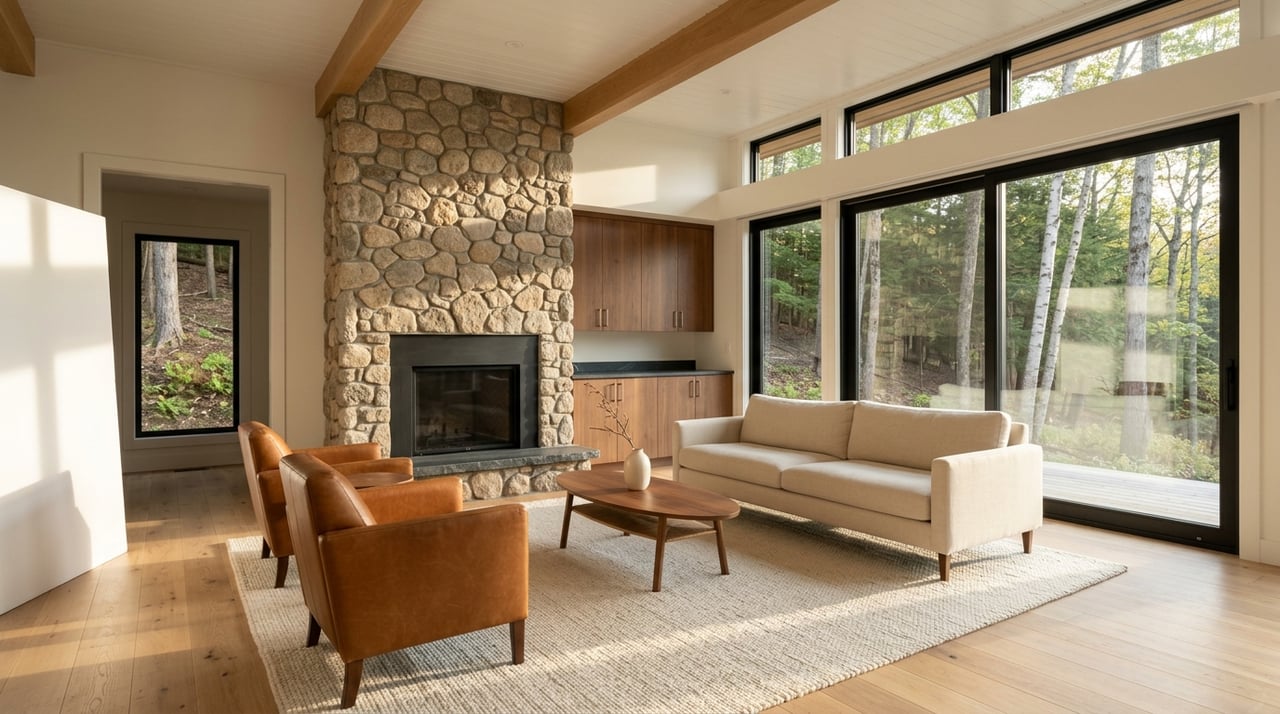
Woodstock VT Luxury Homes in the Village or Hills
If your idea of a second home includes both polished village charm and real privacy, Woodstock deserves a close look. You may be searching for a place where weekends feel easy, the setting feels timeless, and the home itself fits the way you want to spend your time away. In Woodstock, that often comes down to one key choice: do you want to be in the village, or tucked into the hills and valleys nearby? Let’s dive in.
Woodstock stands out because it blends a preserved historic center with strong access to open land, trails, and four-season recreation. According to the National Park Service, the village is known for its historic streetscape, village green, covered bridge, and connection to nearby public lands and trails through a compact footprint. That mix gives you a setting that feels both refined and outdoors-oriented.
It is also accessible for many Northeast buyers. The town’s official visitor guide notes that Woodstock is about 2.5 hours from Boston by car and about 4 to 4.5 hours from New York City, which helps explain why it works well as a weekend or seasonal destination for out-of-area owners. For many buyers, that balance of escape and reach matters just as much as the home itself.
If you picture yourself walking to coffee, dinner, shops, and local landmarks, the village may be the right fit. The Woodstock Village Historic District is centered around a preserved public realm and original town layout, with a strong collection of historic buildings and civic spaces. That gives in-town ownership a sense of continuity and character that is hard to replicate in a newer resort market.
The village atmosphere is one of Woodstock’s biggest draws. The streetscape reflects a mix of historic forms, including Colonial, Federal, Greek Revival, and Late Victorian influences, all within a compact New England setting. For a second-home buyer, that often translates into a lifestyle that feels elegant, low-key, and easy to enjoy on short stays.
Village homes tend to appeal to buyers who want convenience as much as beauty. If you plan to come up for long weekends, it can be especially attractive to have more within walking distance and less dependence on the car once you arrive.
You may appreciate village living if you want:
The walkability is notable for a small Vermont town. The National Park Service says Woodstock has more than nine miles of pedestrian pathways connecting shops, civic destinations, dining, and lodging, while also linking the village to nearby mountains and conserved land.
If you want more privacy, broader views, or a more retreat-like feel, the hills outside the village may be a better fit. This side of Woodstock is shaped less by walkability and more by setting, approach, and landscape. You give up some immediacy, but you often gain a stronger sense of seclusion and space.
A useful local reference point is the Marsh-Billings-Rockefeller Mansion, which the National Park Service describes as a Queen Anne style red brick mansion that began as a Federal-style house and evolved through later design phases. While most homes are obviously not historic mansions, that estate tradition still helps define the upper-end feel of Woodstock’s hill settings.
The surrounding landscape matters too. The National Park Service notes that the gardens and grounds at Marsh-Billings-Rockefeller were carefully designed and later revised by prominent landscape designers, reinforcing the idea that in Woodstock, luxury often comes from the relationship between home, terrain, and view, not simply house size.
Hill and hillside-adjacent properties often feel more composed and private. In many cases, the appeal is not just the house, but also the arrival, the outlook, and the way the land frames the experience of being there.
You may lean toward a hill setting if you want:
The nearby Bungalow, described by the National Park Service as a secluded retreat on the hill beside the Mansion, is another useful example of how Woodstock’s higher-end settings often prioritize quiet and separation without feeling disconnected from the village.
Not every second-home buyer wants to choose strictly between the village and the hills. Woodstock also offers valley and river-adjacent settings that can feel quieter than the village while still carrying strong historic character. These areas may suit buyers who want a tucked-away atmosphere with a different landscape rhythm.
South Woodstock Village Historic District, about five miles south of Woodstock Village, is described as a linear settlement along Route 106 and Kedron Brook between surrounding hills. Its built character includes Federal and Greek Revival styles, giving it a more valley-bound identity than the central village.
Taftsville offers another variation. The Taftsville Historic District nomination notes its position along the Ottauquechee River and its concentration of 19th-century architecture, including Federal, Greek Revival, Cape Cod, and Classic Cottage forms. For buyers drawn to a water-adjacent setting with historic texture, this can be a compelling reference point.
A second home is not just about where you sleep. It is about how you spend your time once you are there. Woodstock has unusual depth in that respect, which is one reason it attracts buyers who want more than a simple vacation house.
The outdoor network is especially strong. Marsh-Billings-Rockefeller National Historical Park offers more than 25 miles of carriage roads and trails, and the park notes that winter trails are groomed by the Woodstock Inn & Resort Nordic Center. That supports a four-season pattern of use that many second-home buyers value.
Beyond the trail system, Woodstock has a well-developed resort and cultural layer. The Woodstock Inn & Resort highlights access to hiking, mountain biking, golf, fly-fishing, alpine and Nordic skiing, snowshoeing, tennis, swimming, spa treatments, and dining. The National Park Service also notes that Billings Farm & Museum is a short stroll from the village center and remains an important part of the area’s historic landscape.
For most buyers, the right choice comes down to how you want to live when you are in Woodstock. There is no single best answer. There is only the best fit for your schedule, priorities, and idea of a second-home experience.
Here is a simple way to think about it:
| Setting | Best For | Tradeoff |
|---|---|---|
| Village | Walkability, historic atmosphere, convenience | Less privacy, tighter setting |
| Hills | Privacy, views, estate feel, retreat atmosphere | Less immediate access to town |
| Valley/River Areas | Tucked-away character, water or brook proximity, historic setting | Depends on exact location and access |
If you plan to use the home often for short stays, village convenience may carry more weight. If your goal is to unplug, host guests, or create a stronger sense of escape, the hills or valley edges may feel more aligned.
Woodstock is a premium market, and second-home buyers should be prepared for selective inventory and a pace that can require patience. According to Zillow’s Woodstock home value data, the average home value was $686,567 as of 2/28/2026. At the same time, Realtor.com’s Woodstock market overview reported a $1.1 million median list price, 48 homes for sale, a median of 99 days on market, and homes typically closing at about 96% of list price.
Taken together, those figures suggest a market where pricing can vary widely by location, condition, and property type. They also point to the importance of clarity. If you are shopping for a luxury second home in Woodstock, it helps to define early whether your top priorities are walkability, historic architecture, privacy, land, or view.
Many second-home towns offer recreation. Fewer combine recreation with a preserved historic village, nationally recognized landscape assets, and a strong sense of architectural continuity. That is where Woodstock has a distinct advantage.
You are not just buying access to amenities. You are buying into a place where the village, the trail network, the hillsides, and the historic fabric all work together. For buyers who care about setting and long-term enjoyment, that can make Woodstock feel far more layered than a typical resort destination.
If you are comparing luxury second-home options in Woodstock or throughout the Upper Valley, working with a team that understands lifestyle priorities, historic character, and out-of-area buyer needs can make the search much more focused. When you are ready to talk through your goals, Jessica Dolan can help you explore the right fit with a personalized consultation.
October 15, 2026
October 8, 2026
October 1, 2026
September 24, 2026
September 17, 2026

September 10, 2026
September 3, 2026
August 27, 2026
August 20, 2026
Dolan Real Estate has established a locally owned and operated real estate firm that surpasses the services offered by larger, franchise-based companies. Their clients can attest to the exceptional quality of their work.