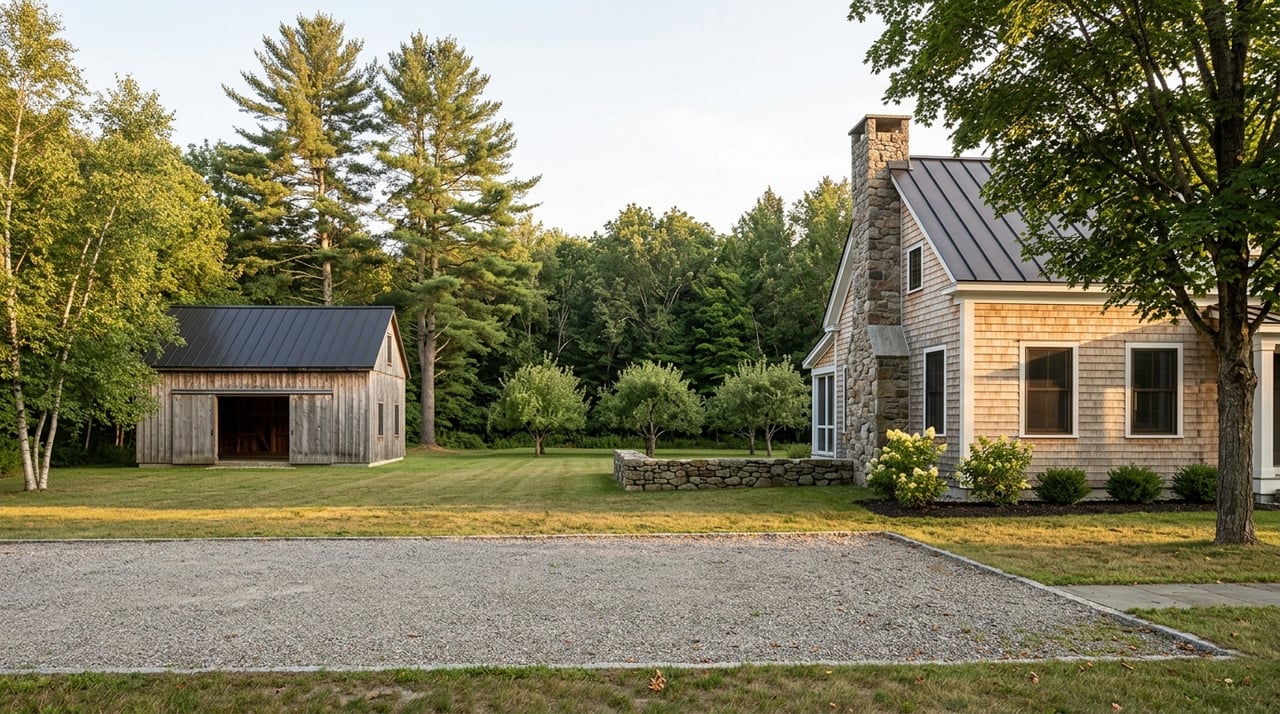
Buying Land in Lyme NH for a Small Farm
Dreaming about a few acres in Lyme, a barn in the distance, and enough space to build the kind of life you actually want? Buying land or a small farm here can be exciting, but it also comes with questions that are easy to miss if you are only looking at the view. If you are considering raw land, a farmhouse, or a hobby-farm property in Lyme, this guide will help you focus on the details that matter most before you make an offer. Let’s dive in.
Lyme offers a rural setting that appeals to buyers who want acreage, privacy, and room for agricultural or outdoor uses while still staying connected to the Upper Valley. Route estimates place Lyme about 10.8 miles, or 17 minutes, from Hanover and about 14.5 miles, or 26 minutes, from Lebanon by road. That makes it a practical option if you want country property without feeling cut off from work, services, or daily amenities.
For many buyers, the appeal is not just the land itself. It is the combination of open space, working-land potential, and a location that supports a full-time home, a relocation move, or a lifestyle property. If you are looking at equestrian or hobby-farm use, Lyme often enters the conversation for good reason.
In Lyme, zoning is not a small detail. It is the first question to answer because the parcel’s zoning district determines what uses may be allowed and what dimensional rules apply. Before you fall in love with a property, confirm that the district supports what you want to do.
In the Rural District, minimum lot size is 3 acres if the parcel is within 1,000 feet of a state highway and 5 acres elsewhere. The ordinance also requires 300 feet of road frontage. Those numbers matter quickly if you are thinking about building, dividing land, or adding agricultural structures.
Lot size, frontage, and setbacks are not judged in a vacuum. The town also evaluates the character of the land and neighborhood, the adequacy of soils for on-site wastewater disposal and wells, and safe access and traffic circulation. In other words, a parcel can look generous on paper but still raise feasibility questions once the site conditions are reviewed.
If you are buying with plans to create an extra lot later, adjust lot lines, or divide ownership in another way, do not assume that process will be simple. Lyme treats a division into two or more lots, a lot-line adjustment, and a condominium division as a subdivision. Each of those requires Planning Board approval at a public hearing.
The town also notes that a survey will probably be required. That means subdivision plans should be part of your early due diligence, not a future guess. A parcel that seems like a strong long-term investment may look very different once approval steps, frontage, access, and soils are factored in.
The town states that the first step for subdivision, site plan review, or a building permit is to contact the Planning and Zoning Administrator. For buyers, that is an important practical takeaway. Early conversations can save you time, money, and frustration.
If you are buying a larger parcel in Lyme, there is a good chance current-use taxation will come up. New Hampshire’s current-use program taxes qualifying land based on its undeveloped use rather than its market value. For buyers, that can be beneficial, but it can also create surprises if you plan to change how the land is used.
A commonly cited threshold is that land generally must be at least 10 acres, or generate $2,500 per year in agricultural or horticultural products, with an application deadline of April 15. If land comes out of current use, a one-time 10% land use change tax is assessed based on the market value at the time of the change. Lyme also notes that land-use-change tax proceeds help fund conservation purchases in town.
This is why one of the smartest questions you can ask early is whether the parcel is enrolled in current use, and if so, whether the full property or only part of it is enrolled. You should also ask whether your planned house site, driveway, barn, subdivision, or other improvement could trigger a land use change. A property can look affordable at first glance, then carry a very different tax picture once improvements begin.
For raw land and many rural properties, buildability often comes down to water and wastewater. In Lyme, septic feasibility and well placement should be treated as early-stage due diligence. They are not details to sort out after closing.
The state recommends that prospective buyers with a private well test the water before purchase, ideally during the inspection period, and then retest periodically after closing. For new-lot development with a well and septic system, the site goes through the state septic approval process. That makes soils, layout, and system location central to whether a parcel will work for your plans.
Even if a property has an older farmhouse on it, do not assume the existing systems will meet your needs without review. If you are planning an addition, a renovated home, or expanded use of the property, updated questions about septic capacity and well condition may become important quickly.
A beautiful back parcel can lose some of its appeal if access is difficult, restricted, or costly to improve. In Lyme, access is more than a convenience issue. It can directly affect whether and how you can build.
The town requires a curb-cut permit for any new access way, or for changes to the first 30 feet of an existing access way that affect erosion, sight distance, or drainage. If the access is to a state highway, a state permit is needed instead. That is a key distinction if you are looking at road frontage along a busier route.
The zoning ordinance also says driveways generally may not serve structures more than 1,000 feet from a Class V or better road unless a special exception is granted. For deep rural parcels, that rule matters. If your dream homesite sits far back from the road, access may need careful review before you move forward.
If you are picturing gardens, chickens, bees, horses, or a modest barn, Lyme may be a strong fit. The town defines agriculture broadly to include livestock, bees, poultry, dairying, greenhouse operations, and forestry. It also lists horseback riding as an outdoor recreation activity.
For buyers exploring farm or equestrian use, that broad definition is helpful. Lyme also explicitly allows agritourism by site plan review where agriculture is the property’s primary use. That does not mean every idea is automatically approved, but it does show that agricultural activity is a recognized part of the local land-use framework.
Still, practical limits matter just as much as definitions. The use may be allowed, but the structure you want to build still has to fit the ordinance.
A lot of buyers focus on whether they can have a barn, shed, or larger agricultural building. The better question is how large it can be, where it can sit, and whether the site can support it under local rules. In Lyme, those answers are district-specific.
The ordinance includes limits on building footprint and lot coverage by district. It also states that agricultural structures in the Rural, East Lyme, and Mountain & Forest districts generally cannot exceed 10,000 square feet unless special relief is approved. At the same time, silos and agricultural structures are exempt from height limits, and there is a waiver path for agricultural structures under state law.
If you want a large barn, hay storage building, or indoor riding area, ask those questions before you make an offer. It is much easier to shape your search around realistic property criteria than to discover later that the structure you envisioned does not fit the site.
Before you make an offer on land or a small farm in Lyme, focus on these core items:
These are the issues that often determine whether a parcel is simply attractive or actually workable for your goals.
Buying land is different from buying a move-in-ready house. With land and small farms, value often depends on what the property can legally and practically support. In Lyme, zoning, access, soils, septic feasibility, and current-use status can all shape the real opportunity.
That is why a thoughtful, local approach matters. When you understand the property beyond the listing photos, you can make a decision with far more confidence. Whether you are searching for a private homesite, a small farm, or an equestrian property, the right guidance can help you spot both the possibilities and the constraints early.
If you are considering buying land or a small farm in Lyme, working with a local team that understands rural property due diligence can make the process feel much more manageable. For personalized guidance on Lyme and the Upper Valley market, reach out to Jessica Dolan.
September 17, 2026

September 10, 2026
September 3, 2026
August 27, 2026
August 20, 2026
August 13, 2026
August 6, 2026
August 6, 2026
July 23, 2026
Dolan Real Estate has established a locally owned and operated real estate firm that surpasses the services offered by larger, franchise-based companies. Their clients can attest to the exceptional quality of their work.