Wolfeboro's Land Market Has a 209-Day Problem, and It Isn't About Price
Why does a vacant building lot in Wolfeboro sit on the market for seven months while a comparable lot in Meredith, thirty minutes down Route 25, sells in less than a week?
That is the question buried inside a Lakes Region land-market report published in late May 2026, and it is not a small gap. Wolfeboro's building lot listings carried a median 209 days on market, the slowest turnover of any town on Lake Winnipesaukee. Meredith's median was 6 days. Laconia's was 18. Even Gilford, which is not exactly known for a sleepy market, moved its land in a median of 112 days. Wolfeboro was the outlier by a wide margin, and the difference has nothing to do with desirability. A separate snapshot of active waterfront listings, current as of late June 2026, put the single highest-priced property on the entire lake, asking $10,950,000, on Wolfeboro Neck. Buyers clearly want to be in Wolfeboro. The question is why the vacant land takes so much longer to close than everything else around it.
Here is the town-by-town breakdown from that land-market analysis, covering active and under-agreement listings across the Lakes Region as of late May 2026:
| Town | Active Land Listings | Median List Price | Median Days on Market |
|---|---|---|---|
| Wolfeboro | 16 | $236,000 | 209 |
| Gilford | 14 | $284,500 | 112 |
| Alton | 13 | $275,000 | 63 |
| Tuftonboro | 10 | $144,450 | 74 |
| Meredith | 10 | $245,000 | 6 |
| Laconia | 18 | $197,500 | 18 |
| Center Harbor | 1 | Pending | N/A |
Across the full 25-town Lakes Region snapshot, there were 127 active and under-agreement land listings at a median price of $225,000 and a median of 71 days on market, with prices ranging from a $29,000 back lot to a $5.5 million parcel. Wolfeboro's median price sits close to the regional norm. Its timeline does not.
Meanwhile, the finished-home side of the Winnipesaukee waterfront market tells a completely different story. Waterfront single-family homes closed 29 sales in the first half of 2026 for a combined $92.6 million, a 43 percent jump in dollar volume and a 16 percent increase in unit sales compared to the same period in 2025, with a median sale price of $2.3 million. The top sale of the year so far, $12.3 million on Black Cat Island in Meredith, closed without apparent friction. Waterfront homes overall still command a premium of 40 percent or more over comparable non-waterfront properties in the region. None of that reads like a market that is slow or hesitant. It reads like a market that moves fast for finished houses and drags for raw dirt, and Wolfeboro is where that drag shows up hardest.
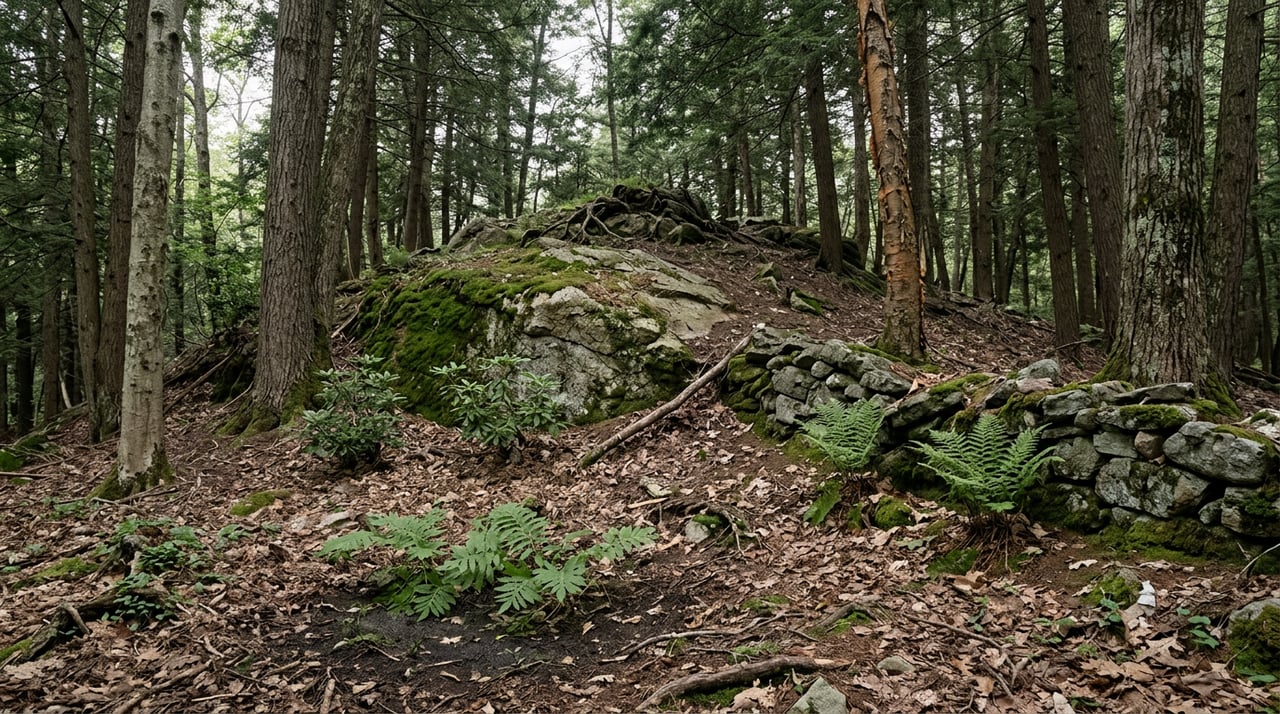
The public listing data does not say why Wolfeboro's number is so far outside the pack, but two things about the town point to an obvious answer. Wolfeboro is one of the more built-out communities on the lake, which means the easy, straightforward building lots sold and got developed years ago. What is left on the market today skews toward the parcels that were passed over for a reason: steep grades, wet soils, tight shoreland setbacks, or a location close enough to the water to fall under New Hampshire's shoreland rules. A slow median isn't a sign that Wolfeboro land is unwanted. It's a sign that the remaining inventory is disproportionately the harder lots, the ones that trigger the full weight of what New Hampshire actually requires before shoreland gets built on.
A home that already has a septic system, a dock, and a footprint on the land is selling something the state has already reviewed once. Under RSA 485-A, a developed waterfront property with an existing on-site septic system within 200 feet of a protected waterbody needs a Site Assessment Study at the time of sale, a check on the system that is already there. It is due diligence on a known quantity.
A vacant lot has no known quantity. There is no septic system to assess, so a buyer or seller has to commission an entirely new design from a licensed evaluator: test pits, soil classification, a proposed leach field location, all of it constrained by the same setback and buffer rules that apply everywhere in the protected shoreland. That protected shoreland extends 250 feet back from the reference line on a lake the size of Winnipesaukee, and the first 50 feet of it, the waterfront buffer, comes with its own vegetation retention rules on top of the septic siting requirements.
Any project that disturbs more than 50,000 square feet of contiguous land within the protected shoreland, or that sits on a slope of 25 percent or greater within 50 feet of the water, needs a separate Alteration of Terrain permit under RSA 485-A:17, on top of whatever shoreland or septic approvals are already in motion.
That is not a hypothetical for a raw lot on a hilly shoreline, which describes a meaningful share of Wolfeboro's undeveloped parcels. A finished home rarely triggers this permit at the point of sale because the disturbance already happened, permitted or not, years ago. A buildable lot triggers it fresh, every time, before anyone can confirm where a house is even allowed to sit.
For one of these remaining Wolfeboro lots, particularly anything within reach of the water, getting from purchase agreement to a buildable, financeable parcel usually means clearing several separate reviews, not one:
Each of these has its own timeline and its own fee. The base application fee for wetlands and shoreline permits rose to $600 as of July 1, 2025, following the 2026-2027 state budget, and that is before paying a soil scientist, a surveyor, or an engineer to prepare the application itself. None of it is unusual for New Hampshire shoreland generally. What is unusual is how much of it lands entirely on the land buyer's side of the ledger, with no existing structure to grandfather in and no prior approval to point to.
If you are shopping for buildable land in Wolfeboro, especially anything close to the water, the 209-day median is not a warning to stay away. It is a signal to change what you do before you write an offer, not after.
Get a preliminary septic feasibility opinion before the purchase and sale agreement is final, not during the option period. A soil scientist can often flag whether a lot's buildable envelope is workable within a day or two on-site, long before a full design is complete. Ask the seller directly whether any prior shoreland permit, wetlands permit, or Alteration of Terrain approval exists for the parcel, even a lapsed one. A lot with an old approval on file, even an outdated one, gives DES something to reference rather than starting from a blank slate. And budget the permitting stack as a real, dated line item in your purchase timeline the same way you would budget a mortgage contingency, because 209 days is a median, not a ceiling.
If you are selling vacant land in Wolfeboro, the fix is largely the same in reverse. Commissioning a septic feasibility study and a rough shoreland compliance check before listing, when the parcel is anywhere near the water, turns your lot from an open question into a documented one, and documented lots move faster than blank ones in every market this data covers. It will not shrink 209 days to 6, but it removes the single biggest reason a buyer walks away in month four instead of closing in month two.
Does every vacant lot in Wolfeboro need a full new septic design? Any lot without an existing system does, because RSA 485-A's transfer-based Site Assessment Study only applies to developed properties that already have septic in place. Vacant land needs a ground-up design instead, which takes longer and depends on soil testing.
Is a seasonal dock treated differently than a permanent one? Yes. Seasonal docks that meet standard size and location criteria can often be handled through a voluntary registration, priced at $200 and valid for five years, rather than a full new permit. New construction and anything outside those standard dimensions still requires a wetlands permit.
Does the 209-day figure include homes with existing docks and septic systems already built? No. That figure specifically covers vacant and near-vacant land listings, not finished waterfront homes, which is exactly why the two markets are moving at such different speeds right now.
If you are weighing a vacant lot in Wolfeboro against a finished home somewhere else on the lake, or trying to figure out what a specific parcel's permitting timeline actually looks like before you make an offer, Jessica Dolan works this market and this paperwork every week. Request a personalized consultation and get a straight read on what a given lot will actually take to close, not just what it's listed for.
October 8, 2026
October 1, 2026
September 24, 2026
September 17, 2026

September 10, 2026
September 3, 2026
August 27, 2026
August 20, 2026
August 13, 2026
Dolan Real Estate has established a locally owned and operated real estate firm that surpasses the services offered by larger, franchise-based companies. Their clients can attest to the exceptional quality of their work.